“Breathwork, movement and yoga is an effective holistic approach to the self-management of alleviating menopausal symptoms. Whilst there is a lack of direct empirical evidence for yoga alone, it can support stress reduction, improved sleep, mood regulation, and enhanced agency.
”
What makes movement for perimenopause & menopause different?
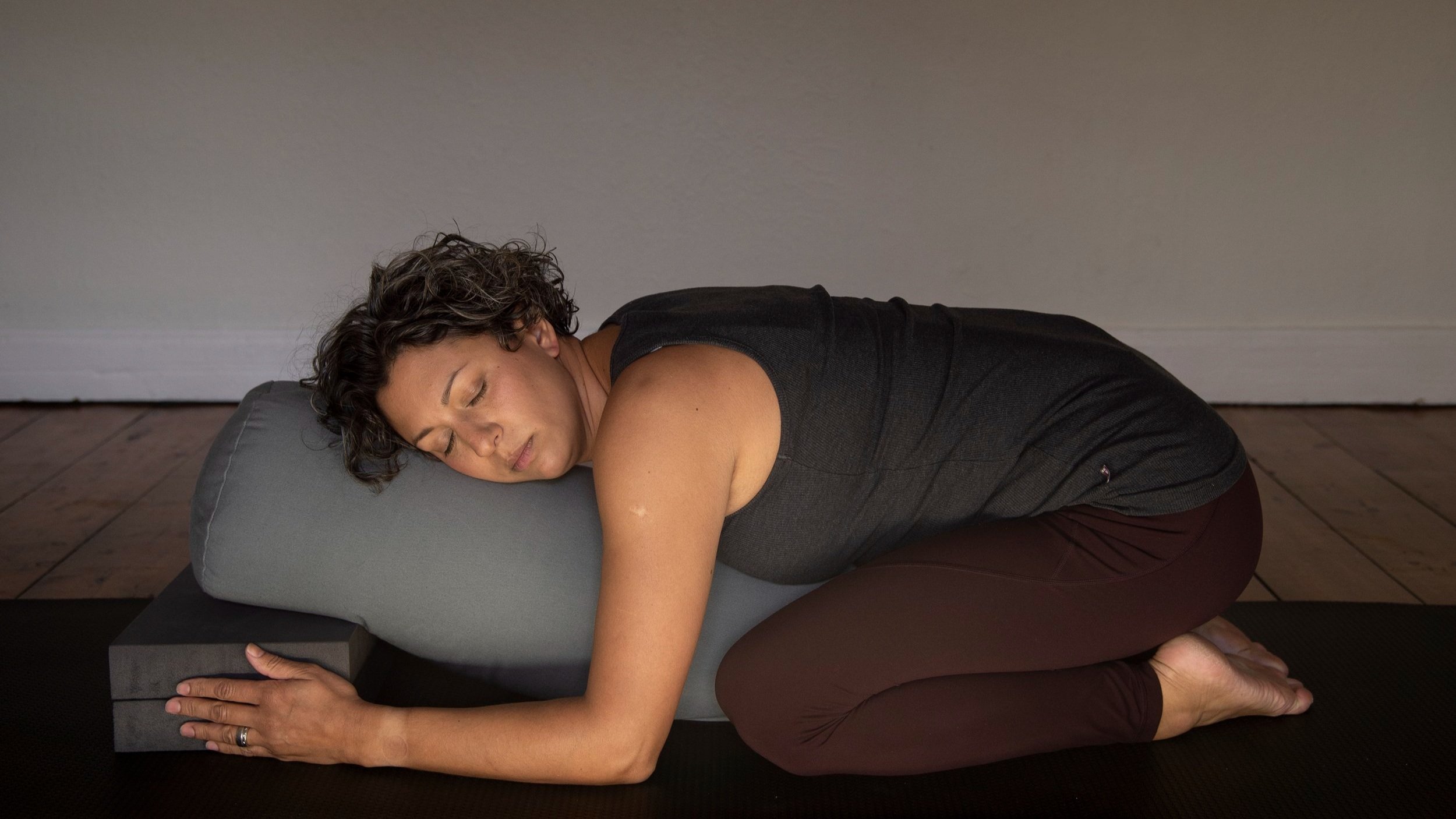
Movement for perimenopause and post menopause incorporates breathwork, somatics, yin, restorative and hatha yoga. Stress is one of the main factors that exacerbates symptoms in perimenopause and post menopause and through movement, breathing techniques, relaxation and meditation we can help to activate the ‘rest & digest’ side of the nervous system (the parasympathetic nervous system) reducing stress, promoting homeostasis (self-regulation to support optimal functioning of the systems in the body) and therefore reducing many symptoms.
When a woman runs out of her supply of viable eggs, her ovaries will cease to make oestrogen, and she will go through menopause. Exactly when this happens depends on many factors. The medical term ‘menopause’ refers to the point at which a woman has stopped menstruating for 12 consecutive months. The perimenopause can last six years or more and is the time up until the menopause. Post menopause is the time after the menopause.
The perimenopause is a whole body experience, as every individual cell in a woman’s body contains an oestrogen receptor. Oestrogen levels fluctuate irregularly in perimenopause and it is oestrogen which helps to regulate mood, body temperature, maintains memory, maintains menstrual cycle, lubricates the vagina, protects the arteries and stimulates breast growth during puberty. Levels of progesterone and testosterone also begin to fall. Progesterone helps maintain the monthly cycle; it also prepares the uterus (womb) for pregnancy and supports the body during pregnancy. Testosterone is produced in the adrenal glands and regulates sex drive, supports bone growth, strength and muscle mass; it can improve mood, concentration and memory.
The fluctuation of oestrogen can cause a myriad of symptoms as illustrated by the infographic below. If we use Dr Lisa Mosconi’s metaphor and think of the brain as an orchestra and oestrogen as the conductor, as oestrogen fluctuates, all the instruments of the orchestra are out of sync. The changing levels of oestrogen affects the hypothalamus, which is a part of our brain linking the nervous system and endocrine (hormones) system. As oestrogen fluctuates, it affects the job of the hypothalamus in regulating body temperature, the stress hormone cortisol, the endocrine system and reproduction. Supported through a regular yoga practice - movement, stillness, meditation and conscious breathing - many symptoms can be alleviated.
The loss of oestrogen means women are at higher risk of osteopenia and osteoporosis. Weight bearing shapes and movements supports the loss of muscle tone and bone density during perimenopause and post menopause. Research has shown that women can increase bone density, making bones stronger and strengthening muscles also supports the skeletal system. Engaging the core muscles can help women strengthen their pelvic floor muscles.
Breathwork and meditation encourage us to look inwards (interoception), becoming more in tune with symptoms and their triggers. A mindful practice enables us to be better prepared by coming into the present moment and becoming aware of the messages our bodies are giving us. Increasing awareness can enable women to intercept patterns or foods that contribute to the often debilitating symptoms. Empowering a sense of support and control, can offer a change in perspective as a woman's body begins this journey.